Linked Lists
The player entity is managed as a doubly linked list. Movement only requires updating the head position and popping the tail, maintaining absolute efficiency regardless of total length.
From initial grid matrices to fluid collision mechanics. Explore the technical and creative blueprint behind our flagship retro title.
View the RoadmapWe set out to build a modern reimagining of classic grid-based survival. The concept relies on minimal variables: a confined space, a growing entity, and persistent objectives.
Rather than relying on modern complex physics, the core mechanic is deterministic. The focus is entirely on player anticipation, routing, and risk management as the play area shrinks relative to the player's size.
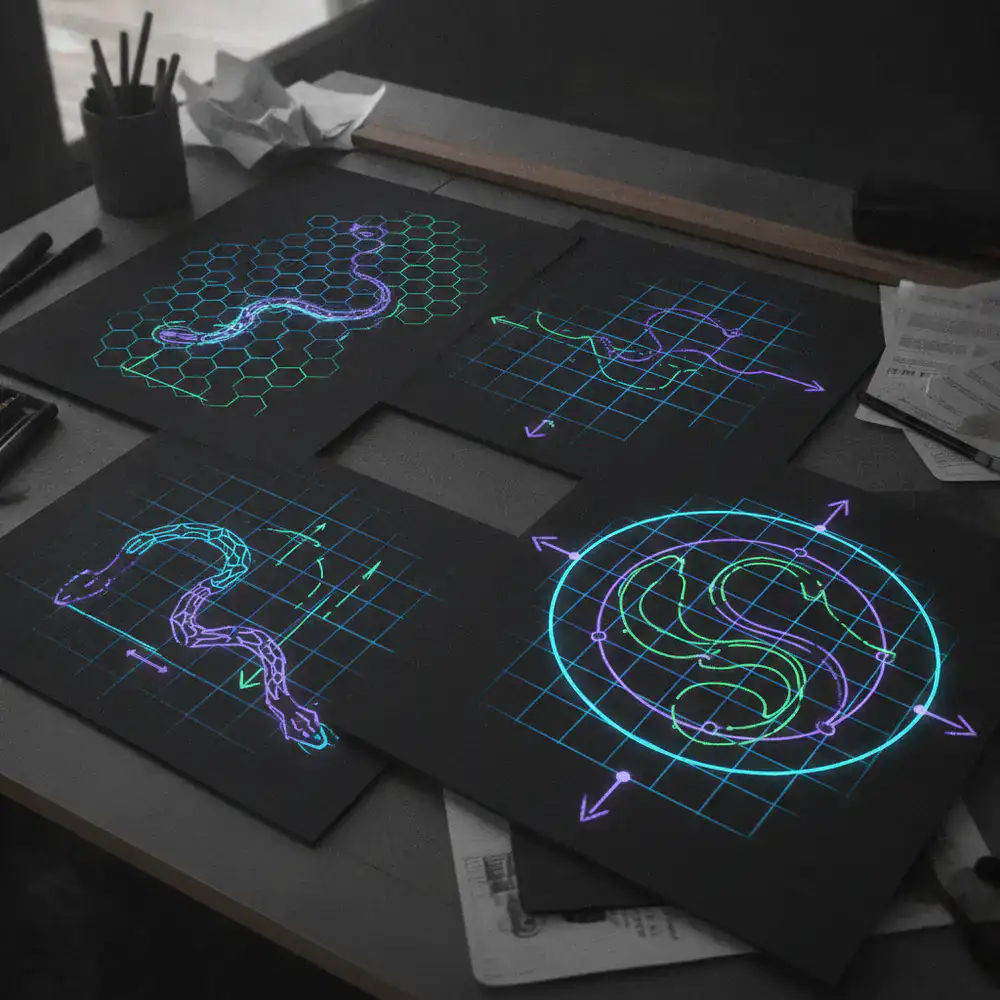
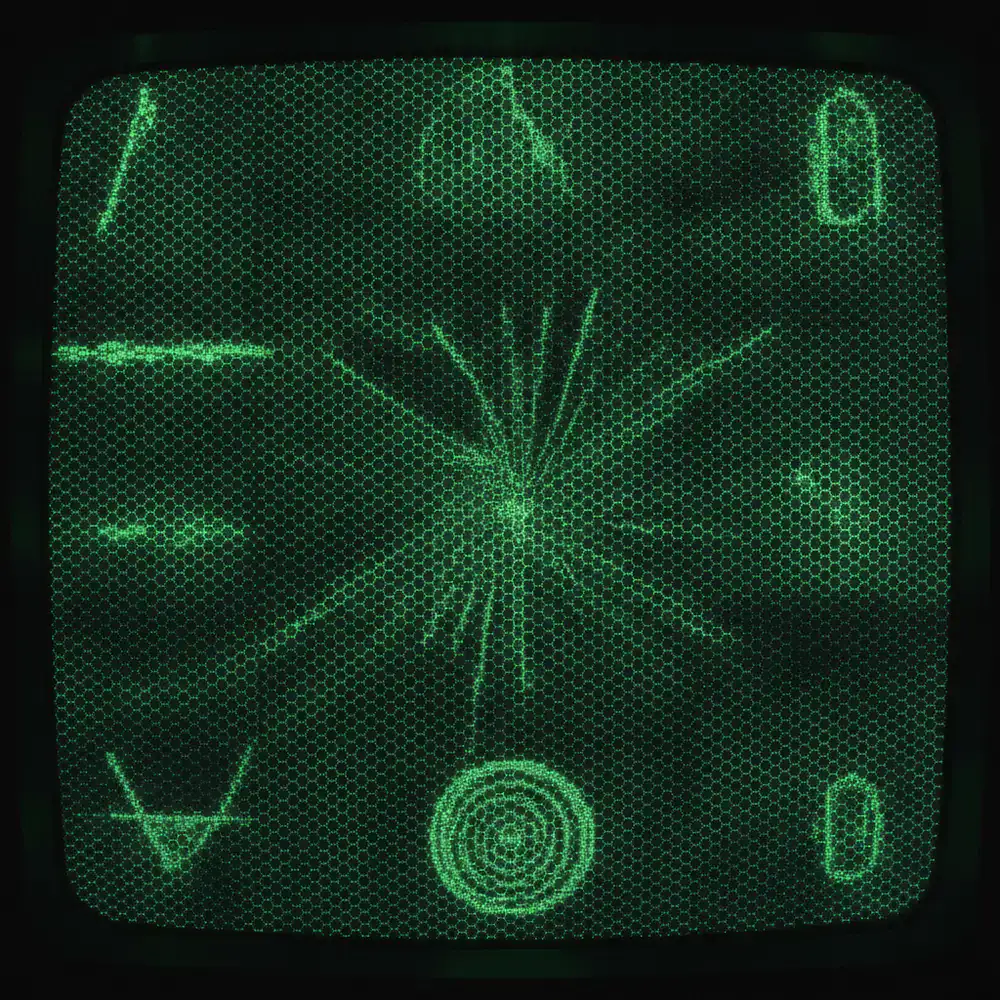
Authenticity to the era was paramount. Our rendering pipeline includes subtle CRT curvature distortion, scanline overlays, and a strict color palette centered around high-contrast neon mint over deep space navy.
Assets are constructed on a rigid pixel grid to prevent fractional positioning blurring, ensuring crisp, nostalgic fidelity on high-resolution modern displays.
Managing performance and accuracy when the player entity occupies hundreds of grid cells requires an optimized underlying data structure.
The player entity is managed as a doubly linked list. Movement only requires updating the head position and popping the tail, maintaining absolute efficiency regardless of total length.
To handle rapid collision checks between the player and boundaries or items, we employ a 2D spatial hash grid, eliminating unnecessary array iterations during high-speed segments.
The game loop decouples input polling from the physics tick rate. This guarantees responsive input queuing while maintaining a steady, nostalgic frame pacing on the screen.
An arcade game is only as good as its controls. We buffer inputs so that consecutive rapid key presses are never lost between frame ticks, preventing frustrating misses.
The polling loop checks for hardware interrupts rapidly, translating analog stick flicks or digital switch presses into immediate grid-snapped directional changes.
Our path from initial prototype to final deployment.
Core movement logic, initial grid rendering, and basic input handling established.
Integration of CRT shader effects, pixel assets, and retro synthesized soundscapes.
Internal testing of difficulty curves, score multipliers, and boundary edge cases.
Code refactoring, memory leak patching, and finalizing cross-platform compatibility.
We periodically send out technical deep dives to our engineering newsletter. Reach out to us at info@snakeloopstudio.com or subscribe below.
Interested in hands-on testing instead?
Learn About Playtesting